

It’s frustrating when we can’t increase our muscle mass, lose weight or think clearly due to low testosterone. As the main male sex hormone, a deficiency can impair reproductive function, lowering sperm count and sperm production, and knocking out sex drive too. It’s also frustrating when the only options seem to be steroids, which may cause more side effects than benefits.
What if there were natural ways to increase testosterone? Read on to learn more about how to increase testosterone with 14 testosterone-boosting foods.
Key Takeaways: Foods That Boost Testosterone
- Beef and oysters are rich in the mineral zinc, an essential nutrient that helps testosterone levels.
- The omega-3 fatty acids in oily fish and tuna keep testosterone levels high by making the testes more responsive to FSH and LH, hormones released by the pituitary gland.
- Pomegranates, olive oil and onions don’t just keep your antioxidant levels up, but maintain testosterone levels too.
- Many of testosterone’s plant pals work by inhibiting aromatase, an enzyme that converts the hormone to estrogen.
- Insulin resistance can reduce the ability of the testes to generate testosterone.
14 Foods That Boost Testosterone
Here are 14 testosterone-boosting foods:
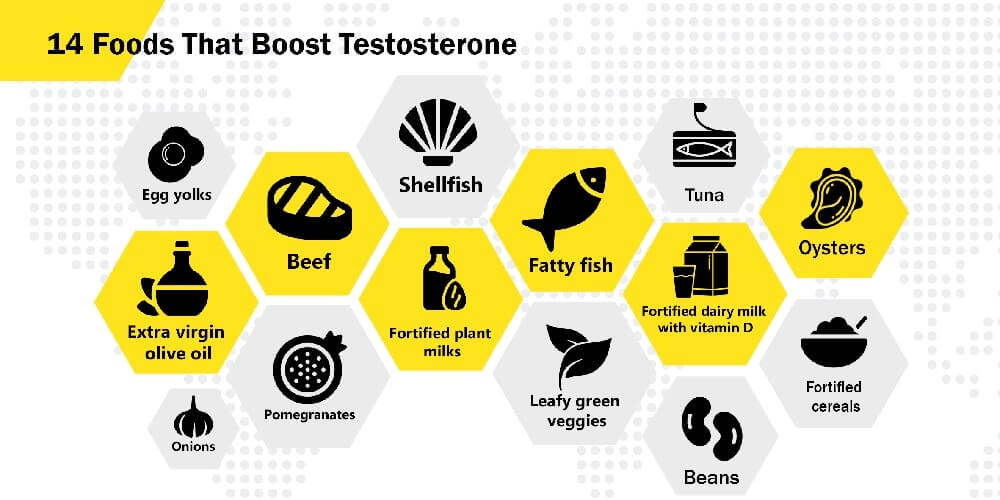
- Egg yolks
- Beef
- Shellfish
- Fatty fish
- Tuna
- Oysters
- Extra virgin olive oil
- Pomegranates
- Fortified plant milks
- Onions
- Leafy green veggies
- Beans
- Fortified dairy milk with vitamin D
- Fortified cereals
1. Egg Yolks
Throwing out egg yolks in favor of egg whites’ protein content was once a fitness trend. However, a study comparing whole eggs to egg whites found that leaving in the egg yolks increased muscle strength and testosterone while reducing body fat [1].
Egg yolks are a rich source of arachidonic acid, which assists the testes in testosterone production. They are also great sources of nutrients such as fat-soluble vitamins, improving your overall health [1].
2. Beef
Beef is an effective and delicious whole-food source of protein that may also boost testosterone naturally. A small trial of six elite athletes demonstrated that beef was more effective in increasing muscle size and testosterone than a calorie-equivalent carbohydrate supplement [2].
With beef, their testosterone-to-cortisol ratio (TCR) improved from 0.31 to 0.4 over a period of eight weeks. The TCR of the carbohydrate group fell slightly, from 0.4 to 0.38. However, beef did not improve iron status [2]. Beef is also a rich source of zinc, which prevented a decline in testosterone after intensive exercise in male athletes [3][4].

Source: https://www.ncbi.nlm.nih.gov/pmc/articles/PMC4300574/
3. Shellfish
Some shellfish, such as king crab, lobster, and clams, are high in zinc [3]. Zinc increases testosterone by reducing its conversion to estrogen, by inhibiting the aromatase enzyme. Lab research on the meat and shell powders of blood clam, Asian green mussel, and the (rare) mud creeper found that they were able to significantly boost testosterone levels [5].
The zinc content of certain shellfish is likely the main reason why they have been used in traditional medicine, including modern integrative practice, to enhance male fertility [5].
4. Fatty Fish
Regularly enjoying oily fish, including salmon, mackerel, and herring are linked with better sperm counts and function. As for which nutrients play the largest role in these benefits, a population study suggests that omega-3 fatty acids pull much of the weight. Men taking fish oil had 8% higher testosterone to luteinizing hormone (LH) levels, as well as lower FSH and LH [6].
These men also had higher sperm counts and larger testes compared to those who didn’t take fish oil. The longer they had been taking fish oil, the higher their sperm counts. Oily fish’s omega-3 fatty acid content is thought to increase the sensitivity of testosterone-producing cells to FSH and improve sperm health [6].
5. Tuna
Tuna gets its own category, as it isn’t considered an oily fish. However, tuna species such as yellowfin and frigate tuna are good sources of omega-3 fatty acids and protein—tuna is particularly high in DHA [7].
DHA and EPA, the other anti-inflammatory fatty acid fish are known for, may increase testosterone in men but not women. DHA-enriched fish oil boosted testosterone by an average of 1.95nmol/L and was effective regardless of age.

Source: https://www.ncbi.nlm.nih.gov/pmc/articles/PMC5613343/
It is thought that EPA and DHA are aromatase inhibitors too, as one of the anti-inflammatory pathways they act on prevents the enzyme from making estrogen [8].
6. Oysters
Oysters are perhaps the highest natural food source of zinc, with Atlantic oysters measuring at 77.35mg per 85-gram serving in one study [3]. As written above, zinc can protect your testosterone production in times of stress such as heavy exercise [4].
Additionally, the Pacific oyster (Crassostrea Gigas) may have other benefits in testosterone production. Partially-digested proteins from the oyster are shown to increase testosterone levels in laboratory research. One way is by boosting the function of some genes responsible for sex hormone release [9].
7. Extra Virgin Olive Oil
Extra-virgin olive oil is well-known for its potential cardiovascular benefits, but what about men’s health? A study testing the effects of extra-virgin olive oil and virgin argan oil on healthy men showed that olive oil may boost testosterone levels by 17.4%, and luteinizing hormone by 42% [10].
The protective antioxidant effects of the oils’ vitamin E content were thought to be partly behind their testosterone-boosting properties. Vitamin E may guard the Leydig cells of the testes against oxidative stress, which would otherwise damage them [10].
8. Pomegranates
Pomegranates appear to be a mixed bag when it comes to being a testosterone-boosting food. Research does suggest that they are aromatase inhibitors, preventing testosterone from being converted to estrogen and promoting a healthy balance of hormones [11].
On the other hand, pure pomegranate juice may reduce testosterone when taken right after exercise. This is similar to other studies showing that antioxidants should be separated from exercise, as their beneficial effects work in opposing pathways [12].
9. Fortified Plant Milks
Plant milks are increasingly popular for both ethical reasons and to avoid lactose and casein, which many people are intolerant to. These are often fortified with nutrients so they can match the health benefits of dairy milk.
If you can’t have dairy milk, it’s best to find calcium-fortified plant milk to prevent deficiency. Besides its bone-building benefits, calcium may increase testosterone too. A study of 30 male athletes found that calcium boosted the rise in testosterone that comes with exercise. It is thought that this benefit comes from calcium’s effects on gonadotropin pathways [13].
10. Onions
Antioxidant-rich onions may fight low testosterone levels in several ways. They appear to protect the testes against inflammation and oxidative stress, and increase nitric oxide, which opens the blood vessels serving the testes. This may have the added bonuses of helping to create erections, reducing fertility issues, lowering blood pressure, and improving heart health.
Onions may act directly by increasing luteinizing hormone too, which stimulates the testes to make testosterone [14]. For these reasons, a study on older men demonstrated that taking onion extract for four weeks significantly increased testosterone. Larger studies are needed, although the results are promising [14].
11. Leafy Green Veggies
Leafy greens, such as spinach and kale, are great food sources of magnesium, which boosts testosterone. A study of taekwondo practitioners and a control group found that magnesium supplements increased testosterone in both groups, but had a stronger effect in the athletes [15].
At rest after supplementation, the athletes had 18% higher free testosterone compared to non-supplemented athletes. While testosterone increases with exercise, taking magnesium led to more testosterone. Magnesium is involved in hundreds of physiological processes, including energy production and moderating stress response [15].

Source: https://www.ncbi.nlm.nih.gov/pmc/articles/PMC3958794/
12. Beans
Certain types of beans may help increase testosterone too. Velvet beans (Mucuna pruriens) act indirectly as a natural testosterone booster, by reducing the stress hormone cortisol and increasing dopamine. Dopamine kicks off gonadotropin-releasing hormone (GnRH) production, which boosts testosterone [16].
13. Fortified Dairy Milk with Vitamin D
Research on Malaysian men found that higher vitamin D levels were linked to higher testosterone, independently of age and ethnicity. The results were dependent on body weight, while other research suggests that vitamin D only increases testosterone in overweight men [17].
In a clinical trial of 200 men, taking 3,332 IU of vitamin D led to a 25% rise in total testosterone levels, from 10.7nmol/L to 13.4nmol/L [18].
14. Fortified Cereals
Some breakfast cereals are fortified with a range of vitamins and minerals, such as zinc, iron, and vitamin D.
As written above, vitamin D supplementation may raise testosterone levels by as much as 25%, when used in high doses [18]. Zinc can boost testosterone naturally and safeguard its production during times of stress, such as heavy exercise [4]. Taking these nutrients together may bring you more gains than one supplement alone.
6 Foods That Increase Testosterone and Lower Estrogen
If you have too much estrogen and not enough testosterone, you can solve two problems at once with aromatase-inhibiting foods.
- Oysters are the richest source of zinc, sometimes measuring up to 77mg per serving in the case of Atlantic oysters [3]. Zinc inhibits the aromatase enzyme, so testosterone is not converted to estrogen.
- White button mushrooms are shown in lab research to reduce aromatase in multiple cellular pathways [19]. They also taste great when cooked and served with steak!
- Cabbage and other cruciferous vegetables contain indole-3-carbinol and diindolylmethane (DIM), well-known for their potential to fight breast cancer. They may also be little-known testosterone-boosting foods, as they work as powerful aromatase inhibitors [20].
- Green tea is high in the phytochemical EGCG, another aromatase inhibitor. Population studies show that green tea lovers can have lower estrogen levels. In lab research, EGCG has inhibited aromatase by up to 56% [21].
- Grapefruit contains naringenin, which can also help restore healthy hormone levels by inhibiting aromatase. Avoid if you are on prescription drugs [21].
- Pomegranates are another aromatase-inhibiting fruit, also mentioned above, that can keep sex hormones at normal levels [11]. To maintain their status as testosterone-boosting foods, avoid consuming right before or after exercise [12].
What Foods Destroy Testosterone?
The 6 key problem foods are [22]:
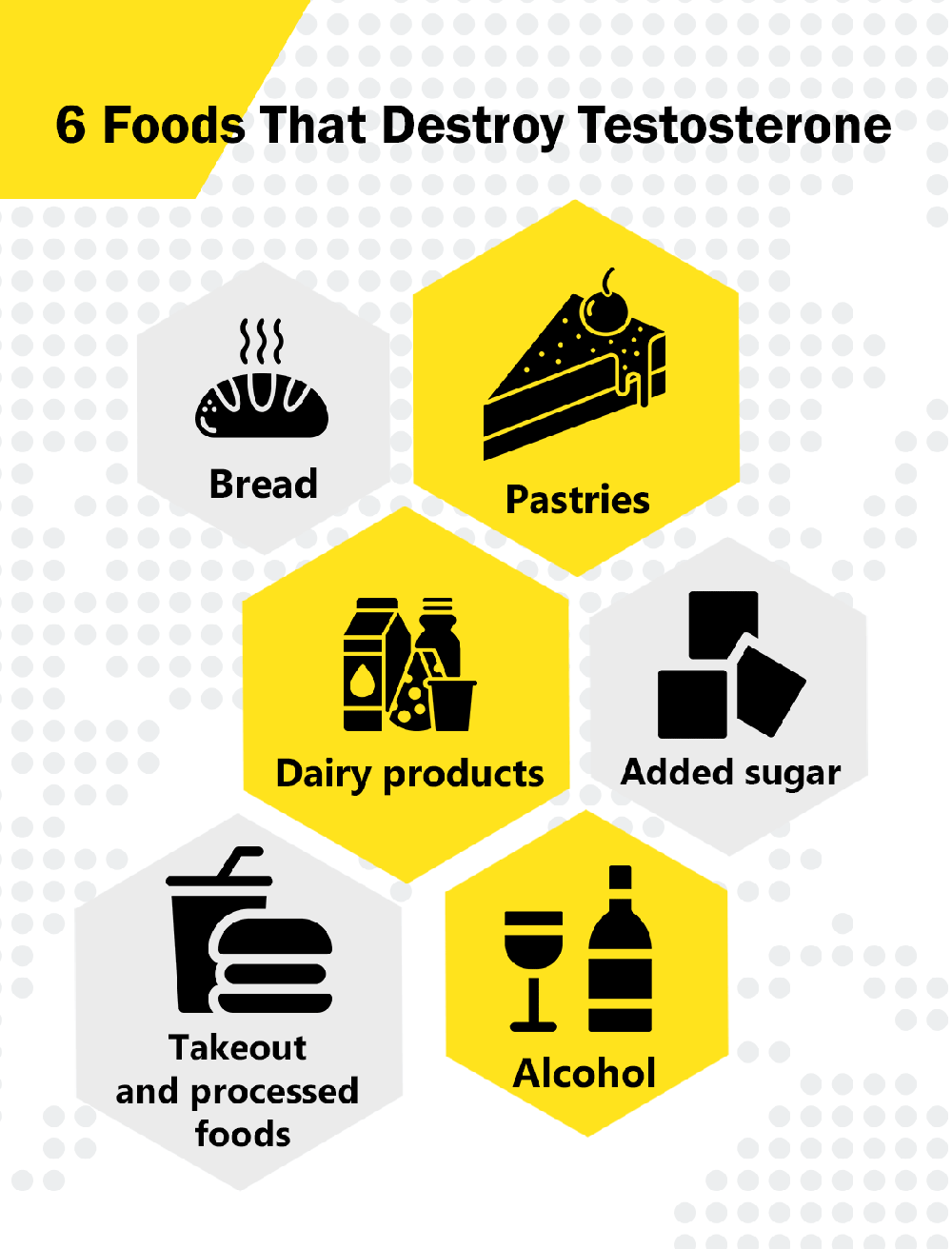
- Bread; together with pastries, was given the highest weighting
- Pastries, packed with carbs, dairy and sugar
- Dairy products
- Added sugar
- Takeout and processed foods, which are typically higher in calories than homemade meals
- Alcohol, according to a number of studies [23]
Research demonstrates that dietary patterns associated with insulin resistance can impair testicular function. The testes respond to insulin, and if they become resistant to the hormone, testosterone synthesis falls.
What Is the One Food That Kills Testosterone?
Alcohol contributes to low testosterone at multiple points in its pathway. First, in the hypothalamus, it reduces gonadotropin-releasing hormone (GnRH). Furthermore, it affects both the production and function of luteinizing hormone (LH), partly by reducing GnRH [23].
Alcohol directly affects testosterone levels too, by increasing conversion to estrogen, increasing cortisol, and impairing its production in the testes [23].
What Is the Best Booster for Testosterone?
Supplementation is another way to increase testosterone levels naturally, without resorting to testosterone replacement therapy. Three supplements we recommend are Testogen, Testo Prime, and TestRX.
- Testogen includes D-aspartic acid, fenugreek, zinc, and vitamin D, along with energizing Korean red ginseng.
- Testo Prime consists of the same ingredients as Testogen, along with green tea extract and pomegranate to keep estrogen down.
- TestRX contains D-aspartic acid and fenugreek, as well as specific forms of zinc, magnesium, and vitamin B6 intended to increase testosterone levels.
FAQ
What are the most important things to know about testosterone-boosting foods?
Which Foods Increase Testosterone the Most?
Foods rich in zinc and omega-3 fatty acids appear to increase testosterone the most. Correcting zinc deficiency and optimizing your levels of the mineral can prevent aromatase from giving you lower testosterone [5]. Omega-3 fatty acids increase sensitivity to FSH, which triggers testosterone release [6].
Beef, oily fish, tuna and oysters stand out among the best testosterone-boosting foods.
Which Fruits Increase Testosterone the Most?
While animal products are the best for maintaining healthy T levels, aromatase-inhibiting fruits such as pomegranate and grapefruit may be effective [11][21].
Do Bananas Increase Testosterone?
Further research on humans is needed, but the root of the banana plant may increase testosterone levels. Studies on rats suggest that an extract could boost testosterone naturally while reducing the need for FSH and LH’s stimulatory effects [24].
Does Lowering Estrogen Increase Testosterone?
Lowering estrogen can increase testosterone. For example, the use of aromatase inhibitors boosts testosterone by reducing its conversion to estrogen. Drugs that block the actions of estrogen are also used to increase testosterone, as they cannot inhibit FSH and LH production [25].
Conclusion
If you’re struggling with low testosterone, there are ways to raise your T levels without resorting to risky steroid hormone supplements. A balanced diet is always best for sexual function and overall health, but animal products such as beef, oily fish, and oysters lead the way. Some fruits and vegetables help out too, with protective antioxidants and aromatase-inhibitors.
If your sex drive still suffers and levels of key hormones are imbalanced despite making dietary changes, supplements such as Testogen, TestRX, and Testo Prime may help.
References
- Bagheri, Reza et al. “Whole Egg Vs. Egg White Ingestion During 12 weeks of Resistance Training in Trained Young Males: A Randomized Controlled Trial.” Journal of strength and conditioning research vol. 35,2 (2021): 411-419. doi:10.1519/JSC.0000000000003922
- Valenzuela, Pedro L et al. “Effects of Beef Protein Supplementation in Male Elite Triathletes: A Randomized, Controlled, Double-Blind, Cross-Over Study.” Journal of the American College of Nutrition vol. 40,1 (2021): 53-60. doi:10.1080/07315724.2020.1727377
- Solomons, Noel W. “Dietary Sources of Zinc and Factors Affecting Its Bioavailability.” SAGE Journals, (2001) journals.sagepub.com/doi/abs/10.1177/156482650102200204.
- Kilic, Mehmet et al. “The effect of exhaustion exercise on thyroid hormones and testosterone levels of elite athletes receiving oral zinc.” Neuro endocrinology letters vol. 27,1-2 (2006): 247-52.
- Astuti, Pudji et al. “Effect of shell as natural testosterone boosters in Sprague Dawley rats.” Veterinary world vol. 12,10 (2019): 1677-1681. doi:10.14202/vetworld.2019.1677-1681
- Jensen, Tina Kold et al. “Associations of Fish Oil Supplement Use With Testicular Function in Young Men.” JAMA network open vol. 3,1 e1919462. 3 Jan. 2020, doi:10.1001/jamanetworkopen.2019.19462
- Karunarathna, K.A.A.U., and M.V.E. Attygalle. “Nutritional Evaluation in Five Species of Tuna.” University of Sri Jayewardenepura, 13 November 2009, dr.lib.sjp.ac.lk/handle/123456789/1012.
- Abbott, Kylie, et al. “Dietary Supplementation with Docosahexaenoic Acid Rich Fish Oil Increases Circulating Levels of Testosterone in Overweight and Obese Men.” Prostaglandins, Leukotrienes and Essential Fatty Acids, Churchill Livingstone, 12 Nov. 2020, www.sciencedirect.com/science/article/abs/pii/S0952327820301629.
- Zhang, Wanwan et al. “Enzymatic preparation of Crassostrea oyster peptides and their promoting effect on male hormone production.” Journal of ethnopharmacology vol. 264 (2021): 113382. doi:10.1016/j.jep.2020.113382
- Derouiche, Abdelfettah et al. “Effect of argan and olive oil consumption on the hormonal profile of androgens among healthy adult Moroccan men.” Natural product communications vol. 8,1 (2013): 51-3.
- Adams, Lynn S., et al. “Pomegranate Ellagitannin–Derived Compounds Exhibit Antiproliferative and Antiaromatase Activity in Breast Cancer Cells In Vitro.” Cancer Prevention Research, American Association for Cancer Research, 1 Jan. 2010, cancerpreventionresearch.aacrjournals.org/content/3/1/108.short.
- Ammar, Achraf et al. “Effects of natural polyphenol-rich pomegranate juice on the acute and delayed response of Homocysteine and steroidal hormones following weightlifting exercises: a double-blind, placebo-controlled trial.” Journal of the International Society of Sports Nutrition vol. 17,1 15. 6 Mar. 2020, doi:10.1186/s12970-020-00345-w
- Cinar, Vedat et al. “Testosterone levels in athletes at rest and exhaustion: effects of calcium supplementation.” Biological trace element research vol. 129,1-3 (2009): 65-9. doi:10.1007/s12011-008-8294-5
- Banihani, Saleem Ali. “Testosterone in Males as Enhanced by Onion (Allium Cepa L.).” Biomolecules vol. 9,2 75. 21 Feb. 2019, doi:10.3390/biom9020075
- Cinar, Vedat et al. “Effects of magnesium supplementation on testosterone levels of athletes and sedentary subjects at rest and after exhaustion.” Biological trace element research vol. 140,1 (2011): 18-23. doi:10.1007/s12011-010-8676-3
- Shukla, Kamla Kant et al. “Mucuna pruriens Reduces Stress and Improves the Quality of Semen in Infertile Men.” Evidence-based complementary and alternative medicine : eCAM vol. 7,1 (2010): 137-44. doi:10.1093/ecam/nem171
- Kok-Yong Chin, et al. “Vitamin D is significantly associated with total testosterone and sex hormone-binding globulin in Malaysian men.” The Aging Male, vol. 18,3 (2015): 175-179. doi: 10.3109/13685538.2015.1034686
- Pilz, S et al. “Effect of vitamin D supplementation on testosterone levels in men.” Hormone and metabolic research = Hormon- und Stoffwechselforschung = Hormones et metabolisme vol. 43,3 (2011): 223-5. doi:10.1055/s-0030-1269854
- Grube, B J et al. “White button mushroom phytochemicals inhibit aromatase activity and breast cancer cell proliferation.” The Journal of nutrition vol. 131,12 (2001): 3288-93. doi:10.1093/jn/131.12.3288
- Licznerska, Barbara E et al. “Modulation of CYP19 expression by cabbage juices and their active components: indole-3-carbinol and 3,3′-diindolylmethene in human breast epithelial cell lines.” European journal of nutrition vol. 52,5 (2013): 1483-92. doi:10.1007/s00394-012-0455-9
- Balunas, Marcy J et al. “Natural products as aromatase inhibitors.” Anti-cancer agents in medicinal chemistry vol. 8,6 (2008): 646-82.
- Hu, Tzu-Yu et al. “Testosterone-Associated Dietary Pattern Predicts Low Testosterone Levels and Hypogonadism.” Nutrients vol. 10,11 1786. 16 Nov. 2018, doi:10.3390/nu10111786
- Emanuele, M A, and N V Emanuele. “Alcohol’s effects on male reproduction.” Alcohol health and research world vol. 22,3 (1998): 195-201.
- Yakubu, Musa Toyin et al. “Effects of aqueous extract of Musa paradisiaca root on testicular function parameters of male rats.” Journal of basic and clinical physiology and pharmacology vol. 24,2 (2013): 151-7. doi:10.1515/jbcpp-2012-0059
- Lo, Eric M et al. “Alternatives to Testosterone Therapy: A Review.” Sexual medicine reviews vol. 6,1 (2018): 106-113. doi:10.1016/j.sxmr.2017.09.004
Leave a Reply